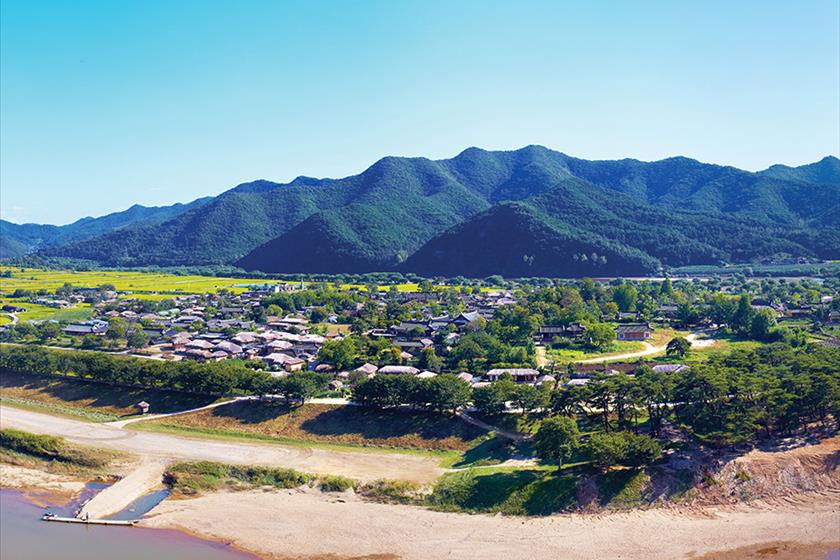
UNESCO listed the village in 2010 as the Korean historic village
Photo Gallery
01 / 23
Description
Category: Folk Village
Designation: Important Folklore Material No. 122 (January 10, 1984)
Era: Joseon Dynasty
Area: 5,288,008㎡
Famous as the birthplace of renowned Joseon-era Neo-Confucian scholars Ryu Unryong (pen name Gyeomam) and Ryu Seongryong (pen name Seo-ae), Hahoe Village is home to the Pungsan Ryu clan and has been inhabited by the same family for generations. The name "Hahoe," meaning "to circle around," derives from the way the Nakdonggang River curves around the village. The village is widely known for the Byeolsingut Talnori (Mask Dance Drama) and the iconic Hahoe Masks. Designated as an Important Folk Material in its entirety, Hahoe Village was inscribed on the UNESCO World Heritage List in July 2010, alongside Yangdong Village, at the 34th session of the World Heritage Committee held in Brasília, Brazil. UNESCO recognized "The Historic Villages of Korea: Hahoe and Yangdong" for their exceptional preservation of traditional Korean architecture, including residences, pavilions, Confucian academies, and schools, which reflect the social structure and aristocratic Confucian culture of the Joseon Dynasty. The layout and architectural harmony of these buildings offer a vivid representation of a historical way of life. The inscription also highlights the intangible heritage passed down through generations: literary works, artistic achievements, academic and cultural contributions of Confucian scholars, and seasonal customs and rituals—including community festivals, ancestral rites, weddings, and coming-of-age ceremonies—which are still practiced by the local residents today.
"In 2010, it was inscribed on the UNESCO World Heritage List along with Yangdong Village in Gyeongju, gaining worldwide recognition for its historical and cultural value." +










 63, Hahoenamchon-gil, Pungcheon-myeon, Andong-si
 Phone +82-54-854-3669
 Summer: 9:00 - 18:00 / Winter: 9:00 - 17:00
 Please refer to the table below
 Free
 UNESCO listed the village in 2010 as the Korean historic village


